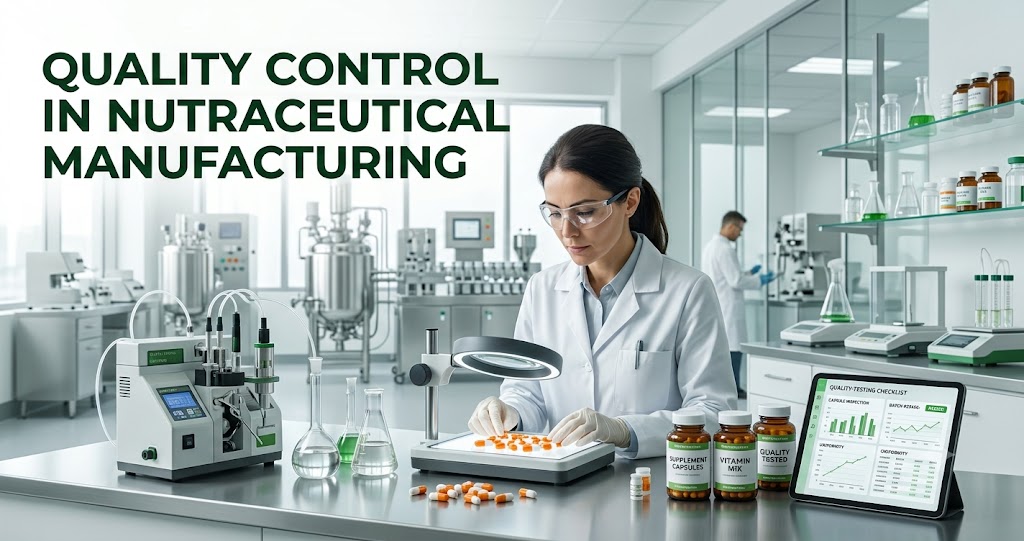
Quality Control in Nutraceutical Manufacturing: What Every Brand Should Know
Consistent specifications, appropriate testing and reliable documentation help nutrition brands build confidence in product quality and manufacturing partnerships.
A structured quality-control programme begins before manufacturing and continues through production, packaging, testing and batch release. The exact programme should be appropriate for the product, its risks, the manufacturing site and the requirements of the intended market.
Seven quality checkpoints every brand should understand
1. Raw Material Verification
Qualify suppliers and verify incoming ingredients against approved specifications. Depending on ingredient risk, this may include identity testing, CoA review, purity checks and other appropriate tests.
2. Formulation & Specifications
Document the agreed requirements for ingredient quantities, nutritional parameters, physical properties, microbiological limits, relevant contaminants and packaging, as applicable.
3. Controlled Manufacturing
Appropriate controls may cover equipment cleaning, personnel hygiene, material identification, weighing accuracy, mixing uniformity, environmental conditions and production-record review.
4. In-Process & Finished Testing
Plan testing around the formulation, dosage form, ingredient risks and target market. Use suitable methods and qualified laboratory facilities where applicable.
5. Packaging & Labelling
Check product identity, batch and expiry coding, label correctness, packaging integrity and applicable mandatory declarations. Export labels need destination-market review.
6. Documentation & Traceability
Maintain traceable raw-material, manufacturing, laboratory, packaging, deviation and release records so that a batch history can be reviewed when needed.
7. Stability & Shelf Life
Support shelf life and storage instructions with appropriate stability data and assessment of the formulation and packaging. Moisture, heat, light, oxygen and ingredient interactions may matter.
What might a product-specific testing plan cover?
How to evaluate a nutraceutical manufacturing partner
Ask clear questions before agreeing on a product or commercial batch. Review evidence where appropriate and confirm responsibilities in writing.
Quality-focused manufacturing at Divit Nutrition
Divit Nutrition invites prospective partners to discuss their product concept, formulation, specifications, testing needs, packaging and intended market. Confirm the specific quality programme, deliverables, certification status and regulatory responsibilities for the relevant facility and product before manufacturing begins.
Discuss your next nutrition product
Planning a nutrition or nutraceutical brand? Start a conversation about your product requirements and technical needs.
Visit Divit Nutrition →Quality note: This article is general educational information and does not establish that a specific facility holds a licence or certification. Verify the relevant documents, their validity and scope independently. Testing and regulatory requirements vary by product category and destination market.