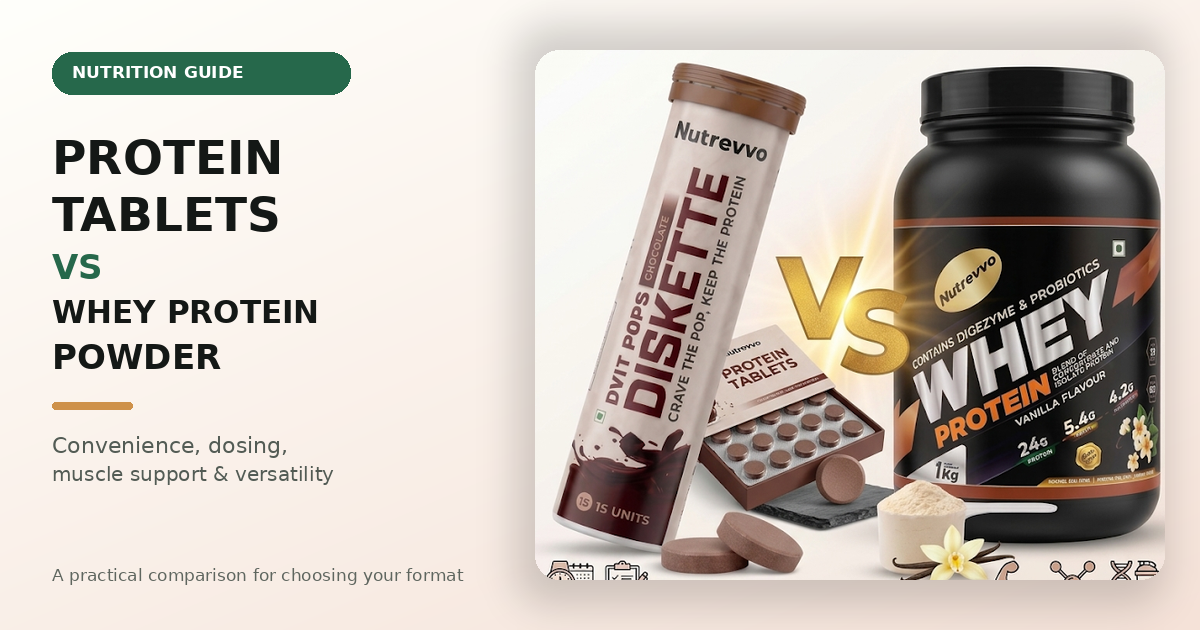
Protein Tablets vs Whey Protein Powder: Which Is Better?
Choosing a protein supplement? The biggest difference is not simply tablets versus powder—it is how many grams of protein you get per serving, how well the product fits your needs, and how easy it is for you to use consistently.
Whey powder can provide a substantial protein serving in one shake. Tablets or diskettes may be easier to carry, but their protein content depends on the specific formulation and serving size.
1. Whey Protein Powder: Pros & Cons
Whey is a milk-derived protein that provides all essential amino acids. A powder serving can deliver a substantial amount of protein, depending on the product and scoop size.
Why people choose powder
- Can provide a relatively high amount of protein per serving.
- Available in different flavours and formulations.
- Easy to mix into smoothies, oats or other foods.
- Protein per serving and cost can be compared from the label.
Possible drawbacks
- Usually needs water or milk and a shaker or blender.
- A tub or pre-measured serving takes up some bag space.
- Some people experience digestive discomfort, especially if they have difficulty tolerating lactose or certain ingredients.
- Flavourings, sweeteners and allergens vary by product.
2. Protein Tablets / Diskettes: Pros & Cons
Compact formats may be convenient to carry, but the amount of protein they provide depends on the exact product. A tablet or diskette should not automatically be considered equivalent to a scoop of whey powder.
Why they may suit some routines
- Compact and easy to pack for work, travel or the gym.
- No shaker or mixing may be needed, depending on the product directions.
- Pre-measured units can make the serving size easy to count.
- Useful when convenience is a priority—if the protein amount meets your needs.
Important limitations
- Some tablets may provide much less protein than a typical powder serving.
- You may need multiple units to reach a meaningful protein amount, depending on the label.
- Check whether the product is meant to be chewed, swallowed or dissolved.
- Verify protein content, ingredients, directions and quality information for the specific product.
3. Quick Comparison: Which Fits You?
| What matters? | Whey protein powder | Protein tablets / diskettes |
|---|---|---|
| Protein amount | Often substantial per serving; check label. | Varies by product; check grams per serving. |
| Preparation | Usually requires mixing. | May need no mixing, depending on directions. |
| Portability | Single-serve sachets are portable; tubs are bulkier. | Often compact and easy to carry. |
| Digestive tolerance | Depends on lactose, ingredients and individual tolerance. | Depends on the protein source, ingredients and serving. |
| Best way to decide | Compare protein, ingredients, price and taste. | Compare protein amount, number of units and instructions. |
4. So, Which One Is Better?
Choose whey powder if…
You want a convenient way to add a substantial protein serving, enjoy shakes, and are comfortable mixing a drink.
Consider tablets or diskettes if…
Portability is your main priority and the specific product provides an amount of protein that fits your nutrition plan.
Frequently Asked Questions
Are protein tablets equal to one scoop of whey?
Not necessarily. Check the nutrition information for grams of protein per serving; the amount can differ considerably between products.
Does whey protein always cause bloating?
No. Some people tolerate it well, while others may experience discomfort related to lactose, serving size or other ingredients. Check the product and your individual tolerance.
Are tablets better for travel?
They can be easier to carry, but single-serve powder sachets are also portable. Consider serving size and preparation requirements.
Can I get enough protein without supplements?
Many people can meet their needs through foods such as dairy, eggs, legumes, soy, fish, meat, nuts and seeds. Supplements are optional for many people.
Final Takeaway
Whey powder often makes it easier to get more protein in one serving; tablets or diskettes may offer convenience, but their protein content must be checked. Choose the product that suits your nutritional needs, budget, taste and daily routine.
For a specific product such as Nutrevvo Diskettes, check the current pack label for protein per serving, serving instructions and ingredients before comparing it with whey powder.
This article is for general information and is not individual medical or dietary advice. People with kidney disease or other medical conditions should consult a qualified healthcare professional before changing protein intake.